
HONORING OUR PLANET AND COMMUNITY
Guided by more than a century of history, we are committed to preserving our architectural heritage, supporting our community, and operating responsibly—ensuring that this treasured place continues to inspire for generations to come.
Since its opening in 1914, Tokyo Station has continued to serve evolving roles through changing eras.
After part of the building was lost during the war, it was not replaced with something new, but carefully restored to its original form. Today, it welcomes people each day as a station, a hotel, and a museum.
To cherish what already exists and continue using it with care—Tokyo Station stands as a true symbol of sustainability.
As a hotel within the historic Marunouchi station building, The Tokyo Station Hotel looks toward the next century, engaging thoughtfully with the environment and the community through a range of ongoing initiatives.

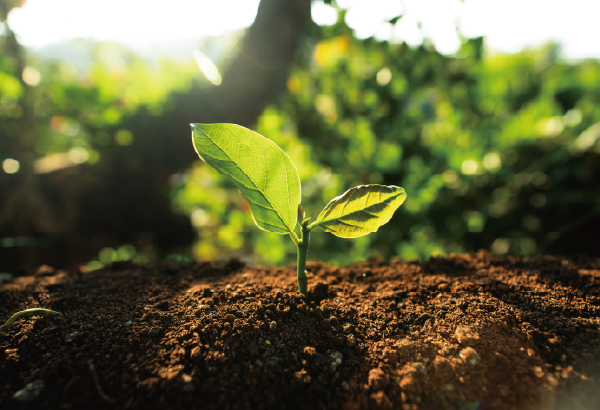
Aiming for a future where people and nature coexist, The Tokyo Station Hotel looks ahead to the next century by joining the “Corporate Forest” initiative—a forest conservation program led by the more trees association. Through this partnership, we are establishing “The Tokyo Station Hotel Forest” in Ryori Kumanoin, Sanriku-cho, Ofunato City, Iwate Prefecture.
Carrying our deep wishes for the continued recovery and revitalization of the Tohoku region, this ongoing project will plant and cultivate one hectare of forest every year starting in fiscal 2026, nurturing a thriving natural legacy for generations to come.
We have introduced a carbon offset program for all stays booked via official channels. Through this initiative, the CO₂ emissions generated by each stay are offset by investing in clean energy development projects.
In 2024 alone, approximately 1,062 tons of CO₂ were offset—equivalent to the amount absorbed annually by around 75,000 cedar trees. The hotel fully covers the cost, allowing guests to contribute to climate action simply by staying with us.

We are reexamining in-room amenities to reduce environmental impact. Toothbrushes now incorporate rice husk materials, while laundry bags, sanitary bags, and hairbrushes use biomass-based plastics.
Drip coffee packaging has transitioned from plastic to paper, and since 2025, suite amenities have featured environmentally conscious skincare products from Sophistance.
Each choice reflects our commitment to reducing waste and selecting more sustainable materials.

We participate in the Clean the World® program to recycle partially used guest room soap that would otherwise be discarded.
Collected soap is processed into new bars and donated to communities affected by poverty, disaster, or conflict.
Since joining the program in 2022, we have reduced waste by approximately 1,000 kg—contributing to the distribution of 224 hygiene kits and supporting efforts to prevent infectious diseases.

Coasters used and sold at Bar Oak are crafted from surplus wood generated during high-end furniture production.
By giving new purpose to materials that would otherwise go unused, we help reduce waste and support sustainable forestry practices.

We carefully consider not only the quality of ingredients we source, but also the dedication and values of the producers behind them.
In our kitchens, ingredients are utilized to their fullest potential. Beef fat and vegetable trimmings generated during preparation are refined and repurposed into sauces, cooking oils, and broths. Nutrient-rich rice bran is transformed into our original baked confection, Rondelle.
Using each ingredient thoughtfully is an essential part of our culinary philosophy.
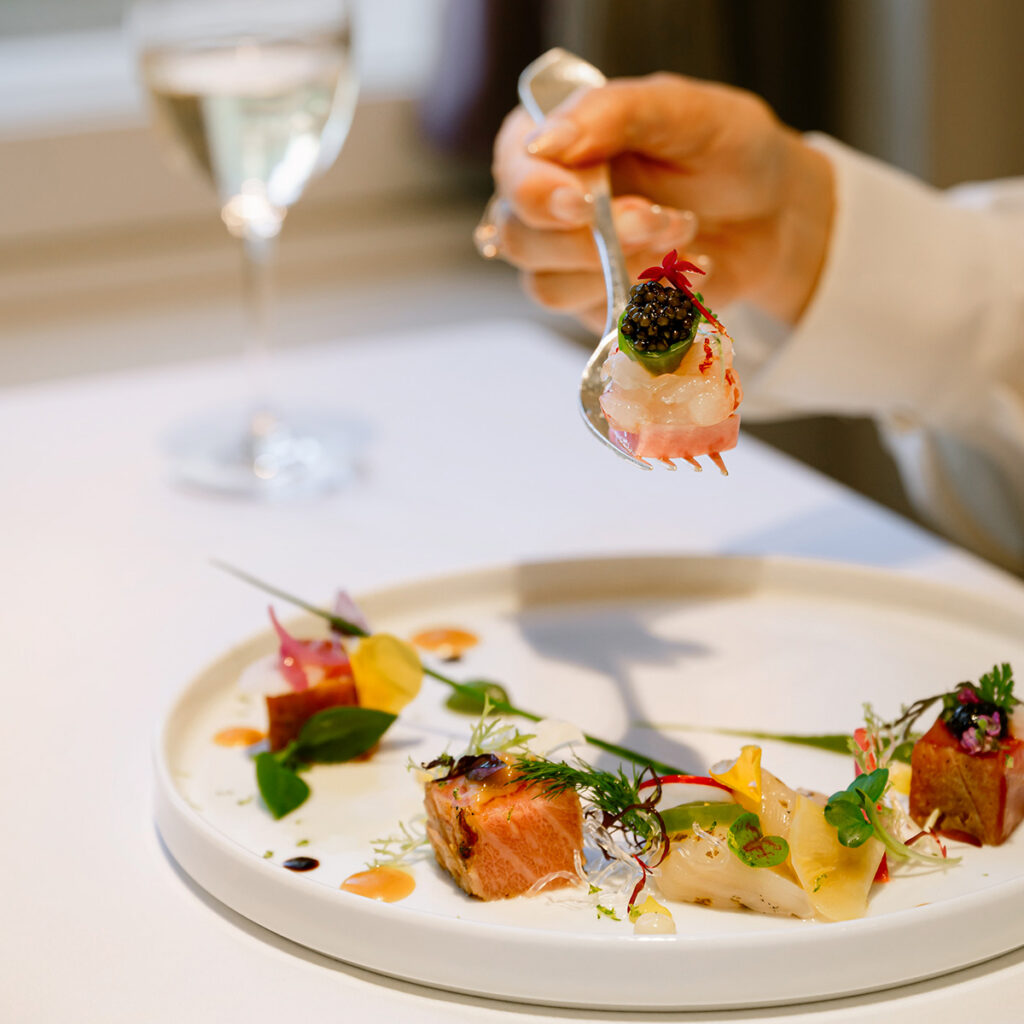
Across our restaurants and banquet operations, we have introduced the Ministry of the Environment’s recommended food waste reduction initiative, mottECO.
When guests are unable to finish their meals, dishes can be taken home in environmentally friendly containers.
Over a ten-month period, this initiative has helped reduce approximately 57,750 grams of food waste across the hotel.
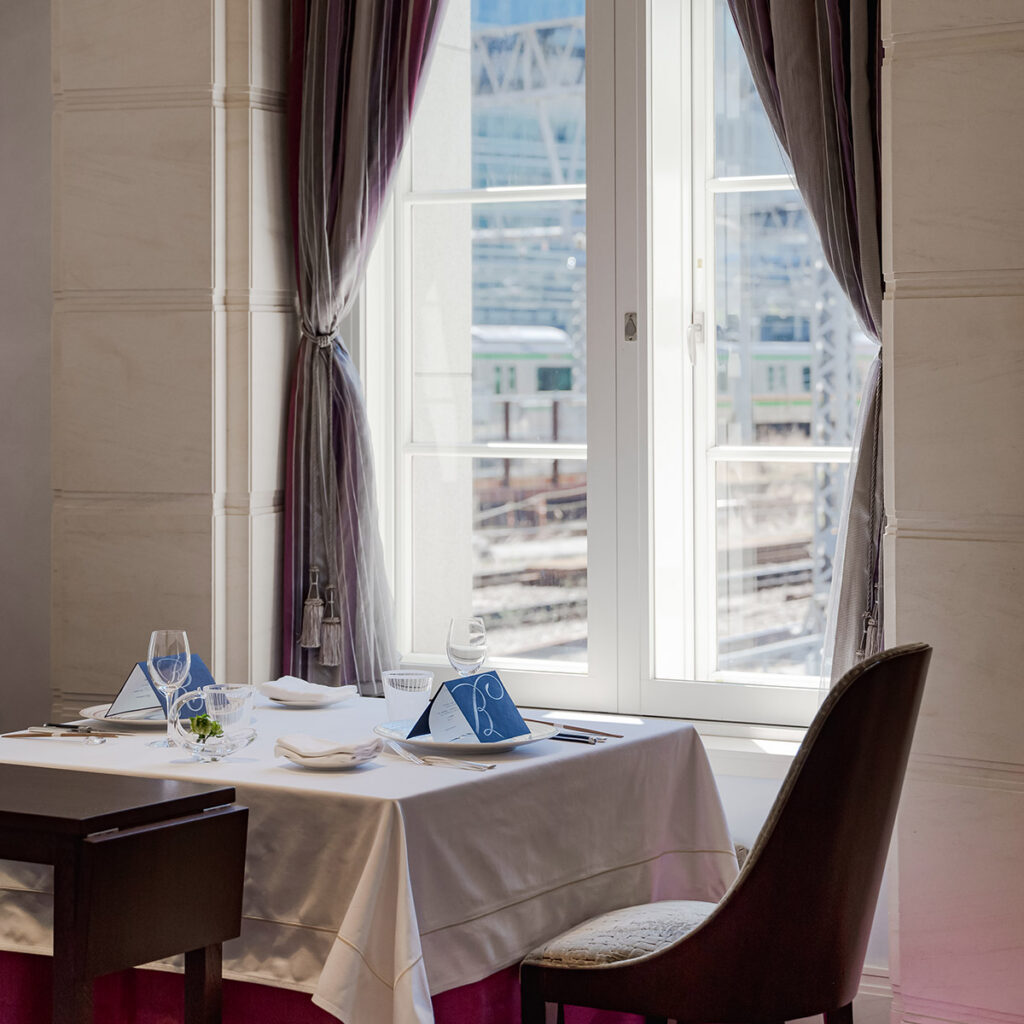
We participate in the “Tokyo Ekimachi Kirapika Campaign,” a biannual community clean-up initiative organized by the Tokyo Station City Management Council. Together with JR East Tokyo Station and neighboring businesses, we help maintain a clean and comfortable environment for all who visit the area.
As a hotel within the station district, we see ourselves as part of the city—and we continue working alongside our community to keep it welcoming for everyone.
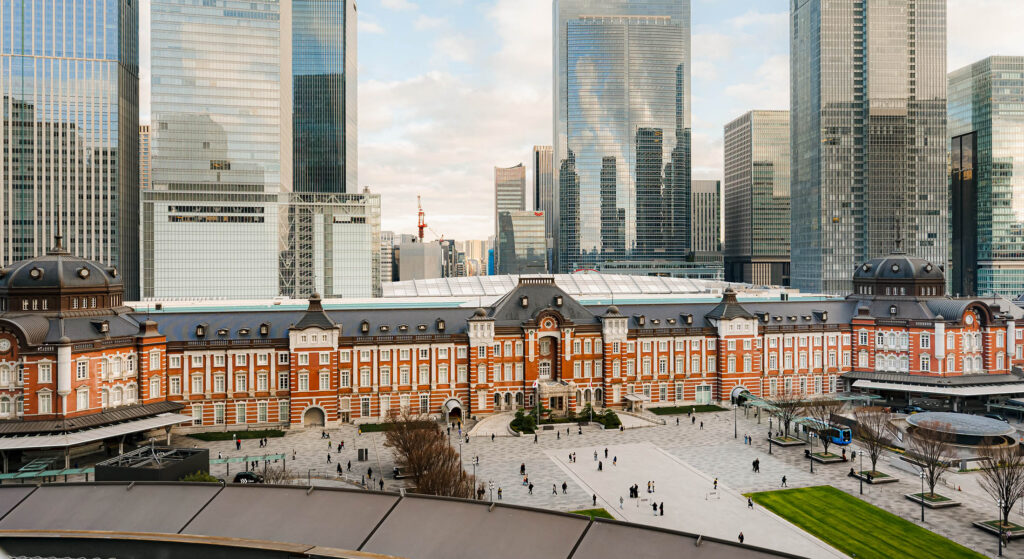
We actively collaborate with nearby cultural institutions and partners.
In 2025, we introduced a special accommodation plan in collaboration with Tokyo Station. In early 2026, we launched a restaurant plan in partnership with the Mitsubishi Ichigokan Museum, located just a five-minute walk from the hotel.
Guests may join a guided midnight tour inside Tokyo Station or enjoy dining experiences connected to a museum visit—creating opportunities to discover not only the hotel, but also the surrounding Marunouchi district.
Within the hotel, curated displays share the history and stories of Tokyo Station and its neighborhood, allowing guests to engage with the area’s cultural background during their stay.
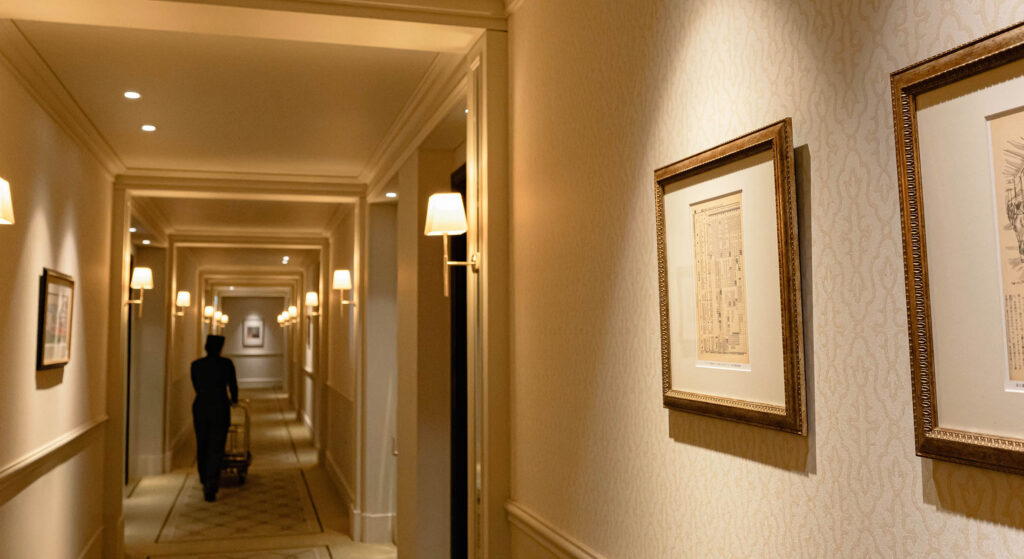
The Tokyo Station Hotel is operated by a diverse team of professionals, including staff members with disabilities, each contributing in their own way.
In 2026, we launched an internship program in partnership with a special needs school, supporting students as they take their first steps toward employment.
We also provide systems that enable employees to balance work with childbirth, childcare, and caregiving responsibilities.
We believe that creating an environment where our staff can thrive is essential to building a truly sustainable hotel.
In March 2025, The Tokyo Station Hotel was awarded the prestigious SAKURA QUALITY Green certification, a Japan-based ESG recognition program for accommodation facilities committed to the United Nations Sustainable Development Goals (SDGs).
The certification is evaluated across 172 criteria aligned with the 17 SDGs.
The hotel received a 4 Gyoiko Sakura rating—the second-highest level within the five-tier system—recognized under the “Regenerative” category, which honors facilities that actively contribute to improving the natural environment and local community as guest numbers grow.